


A persistent sensory neuropathic condition with significant unmet need
Chronic cough is generally defined as a cough lasting more than eight weeks. In some patients, cough persists despite appropriate treatment of associated conditions, or no clear cause is found after clinical evaluation.
Refractory chronic cough (RCC) refers to a cough that continues despite treatment of the underlying or associated condition.
Unexplained chronic cough (UCC, also named idiopathic chronic cough) refers to a persistent cough for which no clear cause is identified.
In practice, the term refractory chronic cough is often used broadly to encompass both RCC and UCC, reflecting their shared clinical features and association with cough hypersensitivity.
RCC/UCC is increasingly understood as a sensory neuropathic condition in which neural pathways in the throat and airways become hypersensitive. Patients may experience throat irritation, an urge to cough, and repeated dry coughing triggered by everyday stimuli such as talking, laughing, cold air, or odors.
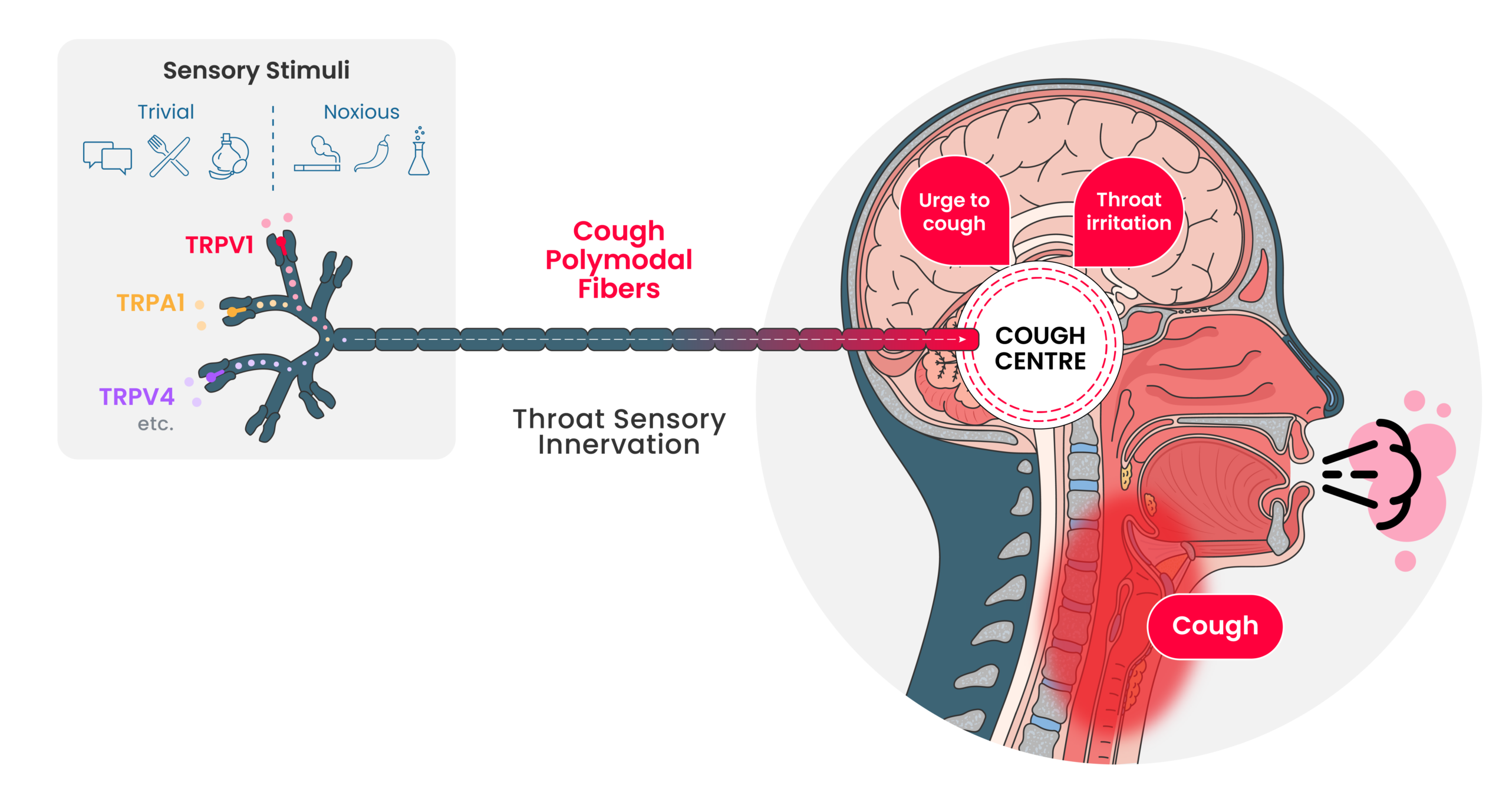
These conditions affect a substantial patient population. Estimates indicate approximately 9 million people with RCC/UCC in the United States, 9 million in Europe and the UK, and 7 million in China.
RCC/UCC can significantly affect quality of life, including social, physical (e.g., stress urinary incontinence), and psychological well-being. Despite this burden, treatment options remain limited, creating a need for new approaches designed specifically for cough hypersensitivity.